Home › Paul's journeys › First Missionary Journey
Paphos
Paphos (Nea Paphos) · Kato Paphos, Paphos, Cyprus
When the proconsul saw what had happened, he believed, for he was astonished at the teaching about the Lord.Acts 13:12 · Berean Standard Bible
- Date
- c. AD 46–48
- With Paul
- Barnabas and John Mark
- What happened
- Sorcerer blinded, proconsul believes
- Modern place
- Kato Paphos, Paphos, Cyprus
The story
At the far end of the island, in the governor's capital, the missionaries met the proconsul Sergius Paulus. Acts calls him "a man of intelligence" who sent for Barnabas and Saul because he wanted to hear the word of God.
In the proconsul's entourage was a Jewish sorcerer and self-styled prophet, Bar-Jesus, also known as Elymas. He opposed them and tried to turn the proconsul away from the faith.
Here Luke first says Saul "was also called Paul". Filled with the Spirit, Paul looked straight at Elymas, denounced him as a son of the devil, and announced that the Lord's hand was against him: he would be blind for a time.
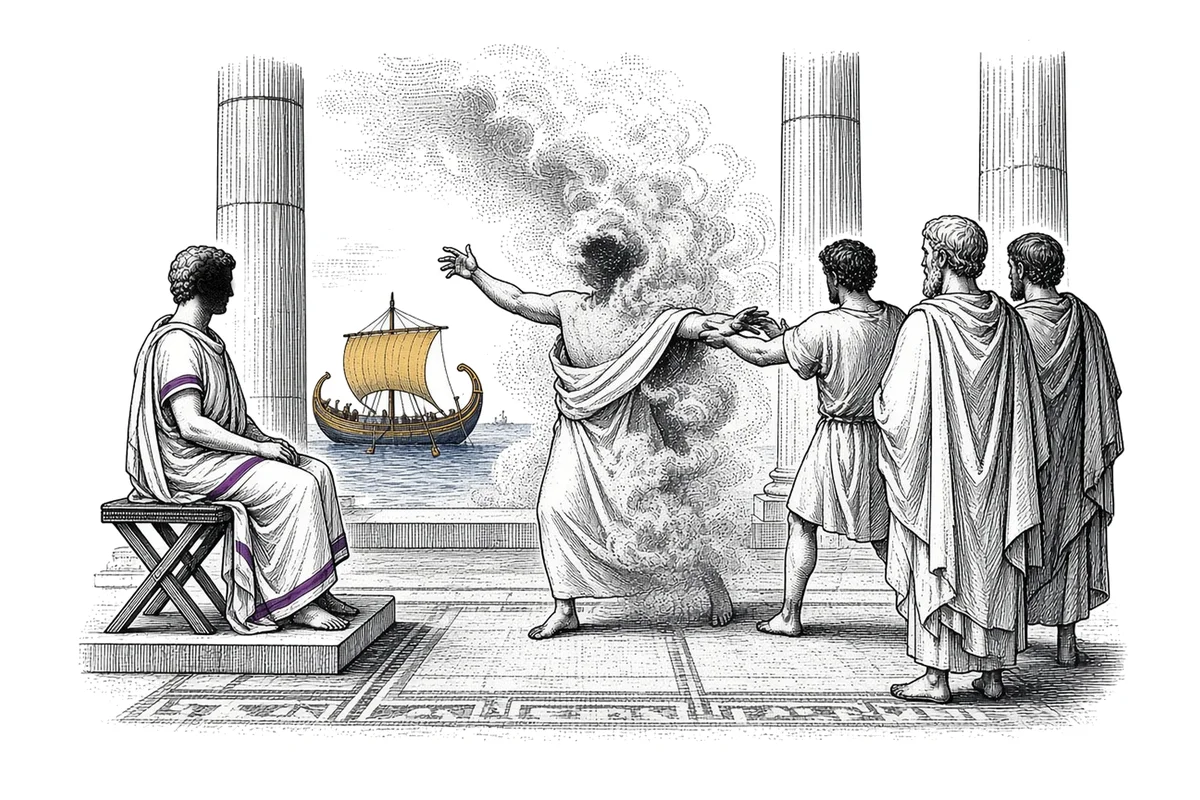
and said, “O child of the devil and enemy of all righteousness, you are full of all kinds of deceit and trickery! Will you never stop perverting the straight ways of the Lord?Acts 13:10
At once mist and darkness came over Elymas, and he groped about for someone to lead him. The proconsul believed, "astonished at the teaching about the Lord".
Now look, the hand of the Lord is against you, and for a time you will be blind and unable to see the light of the sun.” Immediately mist and darkness came over him, and he groped about, seeking someone to lead him by the hand.Acts 13:11
It is a turning point in Acts. From here on Luke calls the apostle "Paul" and usually names him before Barnabas. The journey's first named convert is a Roman senator-governor, though scholars debate exactly what faith Luke means. From Paphos the party sailed to the mainland.
The first named convert of the journey is a Roman senator-governor.
Then and now
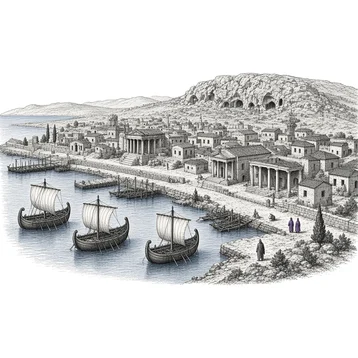
In Paul's day
Today
The place in Paul's day
Nea Paphos was founded in the late 4th century BC by Nikokles, last king of Paphos, as a deep-water port. It became the administrative capital of Cyprus under the Ptolemies in the 2nd century BC and stayed so under Rome, which took the island in 58 BC. From 22 BC Cyprus was a senatorial province, and its proconsul lived at Paphos. That is why Paul met Sergius Paulus here. The city had a regular Hellenistic street grid, a harbour, shipyards, a theatre and an agora. Nearby Old Paphos held the famous sanctuary of Aphrodite, where the goddess was worshipped as a cone-shaped stone and which Roman emperors favoured. The great mosaic villas visible now are mostly later, from the 2nd–3rd centuries AD.
What you can see today
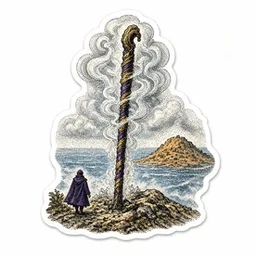
The Paphos Archaeological Park in Kato Paphos is open to visitors and is part of the UNESCO World Heritage Site "Paphos", inscribed in 1980. It contains some of the finest Roman mosaics anywhere, in the Houses of Dionysos, Aion, Theseus and Orpheus, along with the agora, odeon and the Saranta Kolones fortress. Polish archaeologists have excavated the Villa of Theseus since 1966, and its mosaics include Theseus fighting the Minotaur. North of the town are the rock-cut Tombs of the Kings. In the town, beside the Ayia Kyriaki Chrysopolitissa church, stands "St Paul's Pillar", where tradition says Paul was tied and whipped.
Did you know?
- Inscriptions confirm that "L. Sergius Paullus" was a real senatorial name of the period. A Claudian boundary stone in Rome lists an L. Sergius Paullus as a curator of the Tiber's banks. None of the inscriptions securely names the Cyprus proconsul of Acts.
- In the 4th century AD, after destructive earthquakes, the capital of Cyprus moved from Paphos back to Salamis (renamed Constantia).
- BiblePlaces describes the Villa of Theseus as the largest residential building on Cyprus, about 110 × 76 m.
How we know where it was
The Roman capital is the excavated Paphos Archaeological Park at Kato Paphos, a UNESCO World Heritage Site. The "Old Paphos" of the Aphrodite sanctuary (Palaepaphos, at Kouklia) is a separate site further east.
Uncertain or debated
Sergius Paulus inscriptions
No surviving inscription securely names the proconsul of Acts 13:7. The candidates are the Tiber boundary stone at Rome, a Soli inscription naming a proconsul "Paulus", and a Kythrea fragment that may read "Quintus Serg-". Each link to Cyprus's governor rests on restoration or inference. T. B. Mitford judged the Soli text no earlier than about AD 50 and probably later.
"Saul, who was also called Paul."
Jerome suggested Saul took the name in honour of Sergius Paulus, and a modern hypothesis proposes adoption into the family. Many scholars instead think Paul, a Roman citizen, had always carried the Roman name Paulus alongside his Jewish name. On that view Luke simply switches names as the mission turns to Gentiles. The Bible does not settle the question.
The nature of the conversion
Whether "he believed" means full Christian conversion is debated.
St Paul's Pillar
The whipping tradition behind the pillar is not in Acts and cannot be verified.
Bible references
Acts 13:6, 13 (only mentions). The episode runs from Acts 13:6 to 13:12.